

Mancha · Diego S. Garrocho Salcedo
Every stain entails the subversion of a continuity. A stain is always accidental, unforeseen, unexpected. A stain exerts a disruption, an intrusion or interruption on a predictable logic, on a surface, along a trajectory. A stain embodies an alteration, the inclusion of something other upon a reality that ideally aspires to be considered pure, and you already know the ancient relationship between impurity and sin, between the blemish and the transgression. The stain par excellence, as we all know, is always a bloodstain.
As in all negative theology, it would seem appropriate to question the stain by defining what it is—what it is called, how it is recognized—that upon which the stain is imposed. That is, what is not a stain? What is it that the stain ruins or undoes? What is it called that which harbors no stain or possibility of any blemish? What form, then, does the immaculate take? Who has ever seen something upon which a stain cannot spread, even as a threat? It seems obvious that the stained is opposed to the clean, the pure, the immaculate by definition, those realities that evade and avoid any kind of blemish. And it is precisely the Spanish term, which is related to the French, that gives us some clues on which to follow the trail and trace of that which is a stain. A synonym for stain is blemish ( tache ), the defect or mark that, according to the DRAE (Dictionary of the Royal Spanish Academy), is found in something to make it imperfect. If blemishes and stains are the mark of imperfection, it would seem, in some way, that they are the defining characteristic of all that is human. There is no human being without a blemish, just as there would be no blemish without an ideal against which to compare that which is considered imperfect.
The relationship between blemish and humanity might prematurely lead us to a tradition that, in modernity, would be revived to signify that stain which functioned as a disgrace, as a fault inherited in the form of lineage: the bloodstain. However, if we were to philosophically reconstruct the genealogy of impurity, it would be pre-Socratic philosophy that could first speak to us of a stain or a blemish. Only in this way, and perhaps not even then, could we recognize in one of our foundational texts the reconstructive mission of that which, having been stained, aspires to be (once again) pure. Recall, then, the name of Empedocles's famous work that would inaugurate an entire ritual conviction regarding the aesthetic, ethical, and political conversion of the human animal: the purifications or katharmoi . Let us recall that this initiatory process, as outlined by the one at Agrigento, begins precisely with a specific form of failure: “When someone,” Empedocles points out, “through errors of mind, defiles his members and violates the oath he has sworn…” (DK 31 B 115), his punishment will be to wander for three uncountable times. This wandering is the result of a stain, an error , or a failure ( hamartia ) that must be purified. In a way, the relationship between failure and the stain suggests a causal relationship in which the stain, and therefore the need for purification, will always stem from the existence of a prior failure: humankind is the animal expelled from Paradise. It is not the stain that makes us fail, but rather the failure (some failure) that imposes a blemish upon us.
The stain, or the way in which we can attribute and impute moral consideration to it, is not necessarily, or not entirely, exclusively Greek. Although Plato described in the Phaedo that truth is a form of purification ( Phd . 69 c2), the image we most commonly reconstruct whenever we hear an appeal to the immaculate can only have as its primary object iconography and religious literature. References to the stained or impure find some relevant antecedents in the Hebrew language. In a passage that foreshadows the hereditary nature of the stain (something that, again, would run parallel to the inheritance of lineage, sin, and guilt ) , we discover that in Deuteronomy, the mark distinguishing the irredeemable immaculate condition of God from the stain of his children is noted. This is how it is read, for example, in the passage where it is described that corruption is not his (God's) but his children's (Deut. 32:5). The word used is mum (מְאוּם), and it seems to signify a stain comparable to a flaw. This same word can be found in the Song of Songs , reinforcing its aesthetic quality and highlighting that the beloved's yapheh (יָפֶה), that is, her beauty, is due to the absence of stain (Song 4:7). Beauty, therefore, would be defined as that which is free from stain or flaw, that which appears perfect, complete (not surprisingly, in Greek, complete and perfect are one and the same: τέλειος).
Already in the New Testament, the word that could most accurately describe what is stained would be the opposite of purified. Returning to the previously described line of thought of Empedocles, that which is stained is ἀκάθαρτος, that is, that which has not been purified. The most Greek of all the New Testament authors, Paul of Tarsus, uses the term in Ephesians 5:5, although probably the word that best summarizes the stain would be σπῖλος. In that same epistle, we recognize this word to describe that which is immaculate or, literally, that which is holy and without blemish: ἄμωμος (Eph 5:27).
Let us remember that Mômos is the personified representation of mockery, ridicule, or sarcasm. The term ἄμωμος in its plural ἄμωμα will again be the sacred term used in the Letter to the Philippians to describe the condition of being “children of a blameless God” (Phil 2:15), in terms very close to what we will read in Colossians: “to present you holy and without blemish” (ἁγίους καὶ ἀμώμους, Col 1:22). The appellation “without blemish” is primarily reserved for Christ, who presents himself as a spotless martyr, as a pure sacrifice (Heb 9:14), or if not with the precious blood of Christ, as that of a lamb without fault and without blemish (ἀμνοῦ ἀμώμου καὶ). ἀσπίλου (1 Peter 1:19), reminding us of the proximity of both terms. Probably the example that best fits the idea of failure is found in Jude (1:24) where the “stain” is contrasted, precisely, with the “ fall ”: “He who is able to keep you from stumbling and from falling , (ἄπταιστος), and to present you blameless before the presence of his glory with great joy.”
We see, therefore, that everything that appears stained is contrary to beauty, to the sacred, to the immaculate, and to perfection, not only in a religious context but also within the framework of Greek thought. After all, the purifying function was one of the aims of Attic tragedy. In this context, we discover repeated uses of the stain as a moral condition. In Oedipus Rex , for example, Sophocles describes in the dialogue between Oedipus and Creon the need to purify the death of Laius. This political operation transforms purification into a process that allows one to “cast the stain upon the land” (OT, 99). The fault, the sin, or the crime is literally described in Sophocles' text as a miasma, that is, as a “miasma,” something which, according to the Royal Spanish Academy, would be a “malignant effluvium that, it was believed, emanated from diseased bodies, corrupt matter, or stagnant water.” José Vara Donado's translation is excellent (Crespo, 2004, 332), which turns "miasma" into "mancilla," reinforcing the moral connotation that is evident in the term, since macella is a vulgar diminutive of the Latin macula.
The organic connotations that might derive from the Greek word "miasma" place us before a usage that is also recognizable in the use of the stain itself. The macula is originally a stain on the skin, but also, in its moral sense, a quality—like glory, sin, or honor—worthy of being inherited through blood. The link between the organic condition and the moral quality is expressed in the dynastic consideration of the stain, something we recognize when, for example, we observe the common usage that describes the imposition of a stain upon a name. Recall that in Rome, the name was by definition the nomen gentile or gentilicium , a term that designated not the individual person but their lineage. Therefore, the stain imposed upon the name is what dynastically marks an entire family. It is thus revealed that the stain is a matter of blood. In line with this organic treatment we cannot renounce the somewhat later use that we would recognize in Augustine of Hippo for whom it will not be the stain on the flesh but the stain of the flesh itself ( ex carne inquinatum ) that should be feared as we read in his Confessions (Conf. V, X, 20).
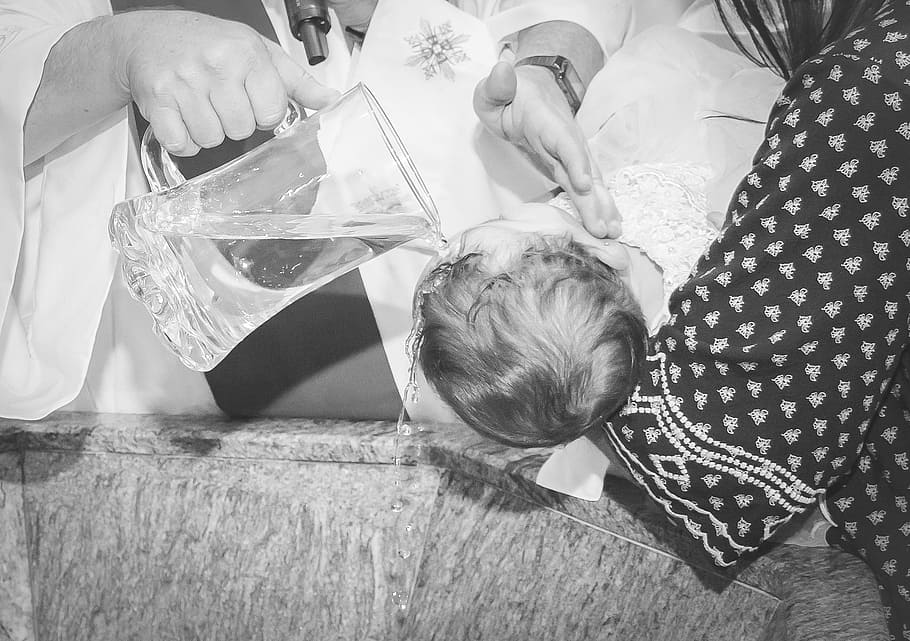
From these considerations, it becomes inevitable to connect the stain with its more political, more emphatic, more absolute, and undoubtedly more terrible opposite: that which I would identify with the statutes relating to Purity of Blood from the end of the 15th century. This legal discrimination aimed to distinguish between those who could prove an immaculate Christian heritage and those other converts who, in some way, would inherit the guilt and stigma of their ancestors. The hereditary understanding of moral quality allowed the New Christians to be considered children (and therefore heirs) of the deicidal sin that, according to the religious fundamentalism of that time, had been perpetrated by the Jewish people (Irigoyen, 2012). The segregation and discrimination of religious minorities established a dispute that would even acquire a fascinating metaphorical and dogmatic dimension: could baptismal water remove any previous sin that might pre-exist on the convert's lineage? In strict compliance, as sometimes endorsed by various Popes or Franciscans such as Gaspar de Uceda, the statutes of purity of blood could be considered contrary to the Catholic faith because they operated a distinction that rivaled the universal and ecumenical vocation of the faith itself.
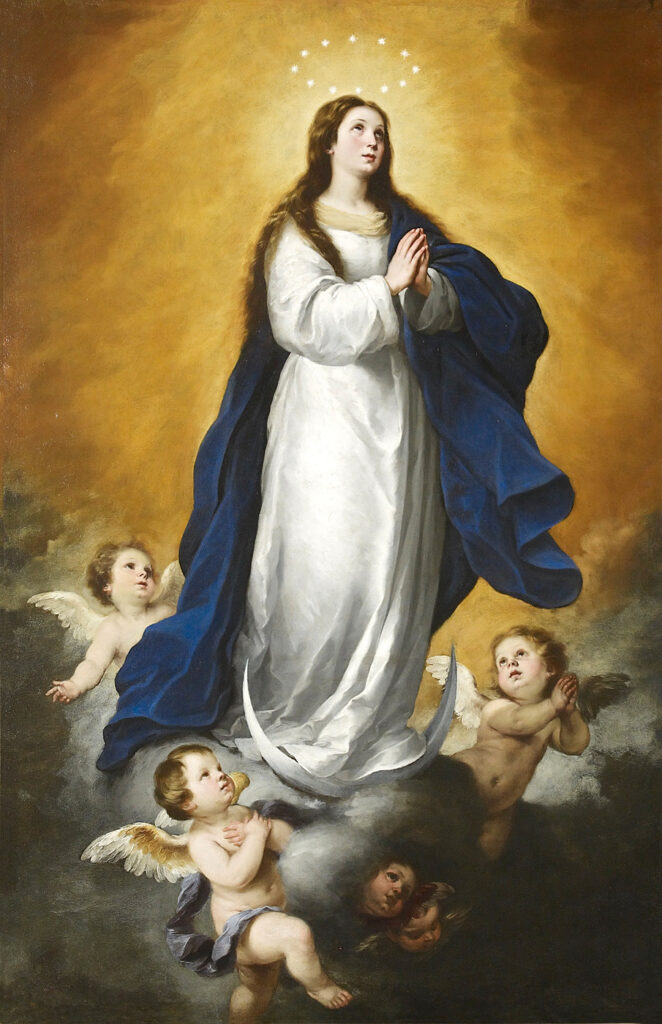
Within this context, it is inevitable to confront the issue of the stain in contrast to the most iconic representation of its opposite: the Immaculate Conception of Mary, which, in pictorial and sculptural terms, established a specific iconography and iconology from the 16th century onward. The Immaculate Conception, traditionally depicted as the Mulier amicta sole described in the Book of Revelation (12:1), is portrayed with a crown of twelve stars, clothed with the sun, and with the moon under her feet. Interestingly, it wasn't until the 19th century, in 1854, that the dogmatic definition of the Immaculate Conception was sanctioned in the apostolic letter Ineffabilis Deus , promulgated by Pius IX. This dogma was never recognized by Protestantism and, in a sense, marks yet another distinguishing feature between Catholics and Protestants. It is worth remembering, however, that many medieval philosophers—including Saint Thomas Aquinas—questioned this doctrine. And there are quite a few researchers who maintain that the dogma of the Tota Pulchra does not derive from the Latin and Roman Church, but that the description of a virgin free from sin, without stain or blemish, has an Eastern origin. It is perhaps for this reason that, through Sicily and southern Italy, the Crown of Aragon became the first of the peninsular kingdoms in which this doctrine took root (Calvo Portela, 156).
It's curious. At the end of the 19th century, Friedrich Nietzsche, whom Thomas Mann considered the most sensitive of all moralists, employed the metaphor of the stain to exemplify his long-desired transvaluation of all values. Thus, in a gesture that was by no means unexpected, the untimely thinker declared in The Antichrist (1888) that "the only immortal stain ( Schandfleck ) of humanity" was, precisely, Christianity (2007, 121). The apologia for the stain, for error, and the discrediting of guilt would acquire a new theoretical significance from Nietzsche's challenge, even though some such fateful milestones as the Nuremberg Laws had revitalized the stigmatization of some human beings based on their origin. Something shifted, however, with Nietzsche's intervention and even before, for not far removed from some of the philosopher's vindications, we find challenges to the logic of purity in the literary, artistic, and moral order. What is the libertine order embodied by the Marquis de Sade, if not an apologia for impurity and defilement? What is the exceptional status of the "Black Venus" that Baudelaire attributed to the beauty of Jeanne Duval and that Édouard Manet also portrayed? How many exceptions to purity have been enshrined in art and literature since then?
Not far removed from each and every one of these impulses—humanizing and apologetic toward the fallible, the stained, and even the fallen—we would recognize a nascent metaphysical order in which limit, order, gender, and purity would be forever revoked. In this sense, few philosophers have resignified the stain or the impure as Jacques Derrida did. If, in Augustine's view, the stain was always the organic residue of sin, in a continuation that is always critical yet fascinated by the thought of the Bishop of Hippo, we would recognize in the Franco-Algerian author the great apologist for impurity. Not surprisingly, and always within the framework of a markedly Jewish, and even Christian according to many accounts, prose, the stain was always the consequence of a mixture, a blend, a hybridization. Let us recall that Jacques Derrida did not hesitate to describe himself as a Marrane (1991, 160), a Marrano of French Catholic culture capable of embracing, by reclaiming the impure condition of his blood, not only without shame but with true pride. In a way, if this entry began by highlighting the metaphorical value of the stain as a bloodstain, that of transgression or crime, but also that of an inheritance transmitted through lineage, the contemporary stain seems to exhibit itself as a proud expression of our fallible condition. The mixed, the impure, the defiled, the marked and stigmatized, the crossed out, the amended, the mestizo, the uninherited and the chosen, aspire today to embody a contradictory instance with respect to the old ideal of purity. Ultimately, this humanization of the world, in defense of the precarious, the accidental, and even the lacking, seems to subsist by virtue of all that it negates. How could we deny it if every stain is, in some sense, the revocation of the dominion of an idea?
Bibliography
Bernabé, A. (2008). Presocratic Fragments . Madrid: Alianza Editorial.
Bover, J., & O'Callaghan, J. (1988). Trilingual New Testament (2nd ed., Library of Christian Authors 400). Madrid: Catholic.
Calvo Portela, J. (2013). The Hispanic Monarchy as defender of the Immaculate Conception, through some Spanish prints of the 17th century. Annals of Art History , 23, 155-168. doi:10.5209/rev_ANHA.2013.v23.41908.
Crespo Güemes, E. (2004). Aeschylus. Sophocles. Euripides. Complete Works . Madrid: Cátedra.
Derrida, J. (1996). Apories . Paris: Galilée.
Derrida, J. & Bennington, G. (1991). Jacques Derrida . Paris: Seuil.
Franco, Juan, & Irigoyen López, Antonio. (2012). Construction and deconstruction of the converso through the memorials of purity of blood during the reign of Philip III. Sefarad , 72(2), 325-350.
Hippo, A. de. (1979). Works of Saint Augustine II . Madrid: BAC
Nietzsche, F. (2007) The Antichrist . Madrid: Alianza Editorial.
Index of illustrations:
Fig.1: Bartolomé Esteban Murillo, The Immaculate Conception , 1655-1660
Fig. 2: Baptism. Public domain photograph: https://creativecommons.org