

Bruno Schulz
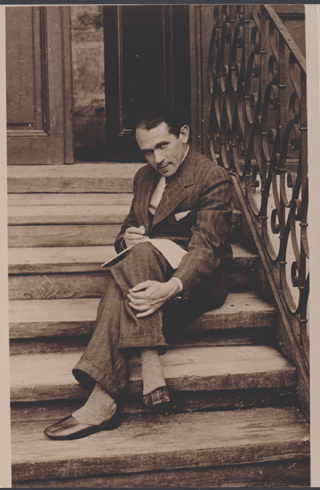
Bruno Schulz was born on July 12, 1892, in Drohobycz, in the Galician region (currently in Ukraine, then in Poland and under the rule of the Austro-Hungarian Empire). The son of a Jewish merchant, his childhood and life in this city (metaphysical, oppressive, and enchanting) would forever mark his work.
In 1920, he published *The Idolater's Book *, an album of engravings that reflects an erotic world of elegant women, indifferent to men who grovel at their feet, among whom Schulz repeatedly included self-portraits. He participated in several exhibitions between 1922 and 1923, becoming one of the leading Jewish artists. In 1934, he spent time in Warsaw, where he met the writer Witold Gombrowicz.
Schulz, Gombrowicz, and Witkiewicz would become the leading figures of the Polish avant-garde between the wars. However, it would all soon come to an end. On September 1, 1939, Poland was invaded by Nazi Germany. Ten days later, the Germans entered Drohobycz. Shortly afterward, the territories of eastern Poland fell into Soviet hands, including Schulz's hometown. On June 22, 1941, Germany attacked the USSR; soon after, Drohobycz was occupied by the Nazis, who began mass executions and deportations to extermination camps. Felix Landau, a Gestapo lieutenant, recognized Schulz's artistic talent and commissioned him to do various jobs in exchange for food. Despite this, Bruno Schulz was forced to live in the Jewish ghetto. On November 19, 1942, Schulz was murdered by a Gestapo officer who was an enemy of Felix Landau.
Updated July 29, 2015
Related content
There is no linked content at this time.