

Ingmar Bergman
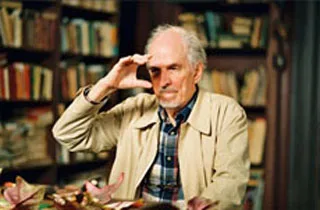
Considered one of the key filmmakers of the second half of the 20th century, Ingmar Bergman directed more than 40 films and more than one hundred plays.
Bergman was not content with being the undisputed leading figure of Scandinavian cinema. This writer, director, and producer of theater, film, radio, and television, born in Uppsala, Sweden, in 1918, grew up in a home steeped in religious metaphysics. The son of a strict Protestant pastor, Bergman decided to study literature and art history at Stockholm University. Between 1944 and 1952, he became the artistic director of the Helsingborg Municipal Theater, in addition to filming Crisis , his debut feature, and a series of adaptations for the independent producer Loren Malmstedt, in which the existential concerns that would later become his trademark were already emerging.
Bergman's work encompasses a range of genres. The Swedish director filmed both light comedies and profoundly deep psychological and philosophical dramas. Among the former, characterized by a poetic treatment of sexuality, Smiles of a Summer Night (1955) stands out. This film catapulted him to international fame, and its success at the Cannes Film Festival made him the most fashionable director in European cinema and led to a rediscovery of his earlier films. The Seventh Seal (1956), on the other hand, is a prime example of his more profound work, a visual allegory of humanity's relationship with God and with death.
During the 1960s, Bergman combined film with theater. Thus, his first period at the helm of the Dramatic Theater of Stockholm did not prevent him from filming movies such as Through a Glass Darkly (1961) and Silence (1963), These Women! (1964) or the anthological Persona (1966), a film that marked the beginning of his collaboration with Liv Ullmann and in which he made an incisive exploration of the human soul.
His position at the forefront of European cinema was consolidated in the 1970s thanks to films such as Cries and Whispers (1972), The Magic Flute (1974), The Serpent's Egg (1977), and Autumn Sonata (1978). His intense film activity did not prevent him from directing a series of plays— The Wild Duck (1972), The Misanthrope (1973), and The Road to Damascus (1974)—or filming emblematic television works such as Scenes from a Marriage (1973) and Face to Face (1975).
In the 1980s, the filmmaker temporarily retired from the big screen with Fanny and Alexander (1982), his most popular film, winner of four Oscars. The final phase of his filmography concluded with Sarabande (2003), a film that brought back the characters from Scenes from a Marriage.
Ingmar Bergman died on July 30th.
Updated July 29, 2015
Related content
There is no linked content at this time.