

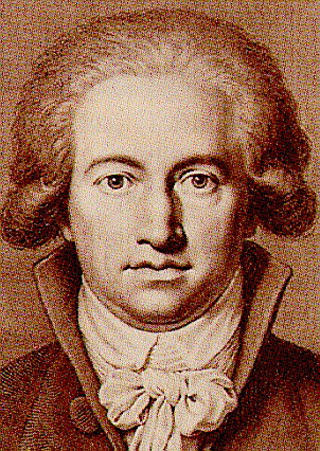
JOHANN WOLFGANG VON GOETHE
A German writer born in 1749 into a patrician family, he began his law studies in Leipzig in 1765, which were interrupted by illness that forced him to return to Frankfurt. Once recovered, he decided to move to Strasbourg to continue his studies, a decisive period as it marked a radical shift in his poetic orientation due to his involvement with the literary and artistic circles of the time. Sturm und Drang, the seed of early Romanticism. During this period he also met Herder, a key figure who introduced him to Homer, Ossian, Shakespeare, and folk poetry.
As a result of these influences, he definitively abandoned the rococo style of his beginnings and wrote several works that initiated a new poetics, among them Songs of Sesenheim, lyrical poems of a simple and spontaneous tone, and About German architecture (1773), a prose hymn dedicated to the architect of Strasbourg Cathedral, which inaugurates the cult of genius.
In 1772 he moved to Wetzlar, where he met Charlotte Buff, the fiancée of his friend Kestner, with whom he fell in love. This unrequited passion inspired his first novel. The Sorrows of Young Werther, a work that constituted the paradigmatic novel of the new movement that was emerging in Germany, Romanticism.
Back in Frankfurt, he wrote some minor theatrical dramas and began composing his most ambitious work, auspiciouswhere he would work until his death. In 1774, still in Frankfurt, he announced his engagement to Lili Schönemann, although this was broken off two years later. After accepting the position of advisor to Duke Charles Augustus, he moved to Weimar, where he permanently settled. The tasks assigned to him by the Duke led him to practically abandon literature for almost ten years. During this time, he began his scientific research, focusing on optics, geology, chemistry, and osteology.
On February 11, 1788, he joined Freemasonry; his status as a Freemason, as well as other interests he apparently cultivated, are attributed to influencing his work, especially in auspiciousIn it, the recreation of the literary myth of the wise man's pact with the devil serves as a broad allegory of humanity, reflecting the author's transition from Romanticism to the personal classicism of his later period.
Updated July 29, 2015
Related content
There is no linked content at this time.