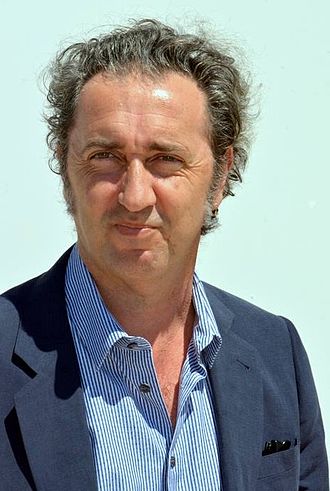

Paolo Sorrentino
Paolo Sorrentino (1970) is one of the most renowned Italian filmmakers on the contemporary international scene. Born in Naples, he began studying economics and commerce, but abandoned his studies at the age of 25 to dedicate himself to filmmaking.
He began his career with the dramatic comedy L'uomo in più (2001), a work that already foreshadowed his penchant for eccentric characters and his melancholically ironic tone. Since then, Sorrentino has built a filmography marked by an unmistakable auteur's vision, where visual artifice, satirical humor, and reflections on power, beauty, decadence, and faith intertwine seamlessly. His cinema has been compared to that of Federico Fellini for its theatricality, its dreamlike quality, and its obsession with the ephemeral nature of glory and desire, all expressed through a surrealist, baroque, and existentialist style.
With Il Divo (2008), a bold portrait of one of the most controversial figures in Italian politics (Giulio Andreotti), he won the Jury Prize at Cannes. His international breakthrough came with The Great Beauty (2013), a fable that, in a way, updates the plot of Fellini's La Dolce Vita , and which earned him the Oscar for Best Foreign Language Film, as well as the same award at the Golden Globes and the BAFTA Awards.
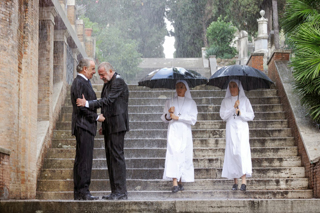
Other notable titles in his filmography include This Must Be the Place (2011), Youth (2015), and È stata la mano di Dio (2021), a highly autobiographical work nominated for the Academy Award for Best International Feature Film. Sorrentino has also made his mark on television with the series The Young Pope (2016) and its sequel, The New Pope (2020), where he explores the papacy as a media and political symbol.
A filmmaker of intense atmospheres, hypnotic images and dialogues that oscillate between the philosophical and the grotesque, Sorrentino continues to expand the boundaries of contemporary European cinema.
Updated April 29, 2025