
Atlas of Artistic Freedom
Strategies to defend cultural freedom in Europe
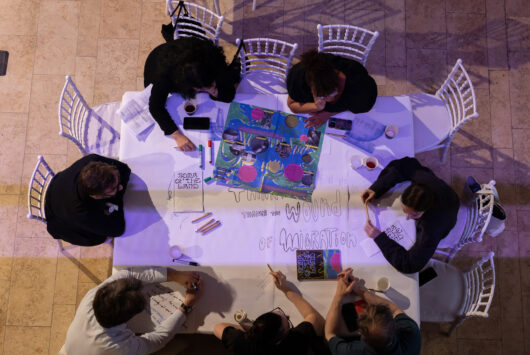
You can now consult the Atlas of Artistic Freedom: Strategies of Resilience and Resistance, a digital platform, coordinated by the Círculo de Bellas Artes within the framework of the Re:Create Europe project, which documents how artists, professionals and cultural institutions operateIt is a phenomenon across Europe when artistic freedom and cultural autonomy are threatened.
Faced with political interference, war, budget cuts, and the climate crisis, the European cultural sector has developed its own responses: solidarity networks, safe spaces for creation , awareness campaigns, and new funding models. The Atlas compiles these strategies and tells their stories through the voices of those who implemented them or experienced them firsthand. It explains what motivated them, how they developed, and what their results were, without omitting what didn't work. Its aim is to make these experiences accessible to those facing similar situations today.
What is being published today is just the beginning: a first version with more than 25 strategies from 15 countries , which can be filtered by country and strategy type. All of them correspond to the first thematic axis, the transformation of cultural policies: how political changes have altered the working conditions of the art and culture world, through censorship, the redirection of funding, or the control of institutions, and how the sector has responded.
Until 2029, the Atlas will continue to add cases and countries, and will launch a new theme each year: recovery from war and aggression (2027), economic threats (2028), and climate and environmental change (2029). To grow, it needs many more voices. If you have promoted or been closely involved with a strategy of this kind, you can propose it through the website.
About Re:Create Europe
The Atlas is part of Re:Create Europe. The Art of Resilience and Resistance (2026–2029), a project co-funded by the European Union's Creative Europe program, involving ten European art academies and cultural institutions, all members of the European Alliance of Academies. The project supports artists and professionals working in adverse contexts: it helps them sustain their activity in times of crisis and defends the conditions that make artistic freedom possible. In addition to the Atlas, coordinated by the Círculo de Bellas Artes, It includes mobility programs, residencies, training, and international conferences.

Funded by the European Union. Views and opinions expressed are however those of the author(s) only and do not necessarily reflect those of the European Union or the European Education and Culture Executive Agency (EACEA). Neither the European Union nor EACEA can be held responsible for them.